Hot Off the Presses scours the internet for newly published books from unknown authors, and saves everyone else the trouble of actually reading books to find out if they’re good or not. New posts every Tuesday and Thursday. This is meant for entertainment purposes only, not serious consumer advice. And there will be spoilers.
They say those who can do, and those who can’t review. If that’s true then I am a Shaolin master of reviewing, and you are all white belts in my dojo, so listen up. Tipu Finds Magic is a fantasy adventure story about a young man, a magical parallel world, and Vampire Republicans.
Our story begins when our protagonist Tipu explains that he is a dull, tedious person. What I gather is that he is a wealthy college student somewhere in Pakistan who is anxious about the way his life is going. Due to social pressure, he is pursuing an engineering degree, but what he really wants is to be a writer. This seems to be a trend: making a perspective character relatable, or making them good candidates for an adventure, by pointing out, at length, what an uninteresting waste of space they are. Does it hit a little too close to home that he’s an inept wannabe author? Maybe. What’s with all the questions, Colombo? He seeks solace in his friend Abdullah, complaining that his life does not have the meaning he expected it to by the ripe old age of twenty one. When his friend offers little comfort, Tipu starts crying. This causes Abdullah to feel “panicked and embarrassed, as he should be,” and tells Tipu to shut up. This is presented as a totally normal way to respond to your friend crying in public. Boys are the worst. And it’s not that I don’t find self-proclaimed losers relatable. In high school I lettered in quiz bowl. I just wish my escapism wasn’t curated by someone who’s eager to remind me I could be doing something more exciting instead.
Rather than go home with his driver, Tipu decides to go for a walk in the forest. Naturally, this forest contains a clearing with a gnome in it named Nomi. Our intrepid hero immediately starts having a dour conversation about life satisfaction with the creature, who speaks like a small child because, quelle surprise, that’s just what he is. At least the gnome doesn’t tell him to shut up. Instead, he offers to take Tipu to the Other Side through a magical portal shaped like a pool ladder. Once through the portal, we are treated to minimal description of this fantastical setting. Once or twice we are told it’s beautiful, and a few times our narrator simply admits he is bad at describing things and says “you’ll have to take my word for it, it was enchanting.” After one particularly flat description of some fantastical event he turns to the reader and asks “isn’t that weird?” Follow your dreams of being a writer, Tipu.
The message is pretty clear: adventure chooses you. Tipu tells us during his adventure that his life isn’t boring anymore, and it only took stumbling across an interdimensional portal for him to forget about his quarter life crisis. Among the gnomes (after the obligatory scene where he amazes them with a cell phone) Tipu learns that the Other Side is a highly regimented society. The gnomes dig holes, happily toiling for their masters, who are vampires. Apparently there are also wizards, werewolves, djinn, and dragons. The blurb says that this book combines European and South Asian mythology. I couldn’t tell you all the ways that Pakistani culture or folklore influences the setting or the plot, but there was one thing that I really enjoyed. The gnomes were brought to Pakistan by the English. They still call their parents abba and amma, but they’re transplanted English garden gnomes. Same with the vampires and wizards. The only creatures that I am sure are not European are the djinn, and they’re treated as pests. This is all treated as perfectly normal and I love it. In a pseudo-medieval European fantasy backdrop, the elves and hobbits or whatever are ancient beings that have always been there. But of course in Pakistan they’re the product of colonialism.
“I didn’t update you this morning because I felt it would become repetitive. I remember reading about these adventures in books, and they were so thrilling. I’m sorry I’m not giving you that experience exactly, but what can I say.”
The vampire in charge, a Red Queen equivalent named Hakim, finds out about this unlicensed human. Tipu and his gnome hosts are in deep trouble for breaking the rules, even though it was unintentional. How Kafkorwellian. This serves to underscore the unfairness of the Other Side, and Tipu has had enough. He teaches the gnomes to say “whatever, man” to their superiors, and to at least demand an explanation for all the digging. Personally I wouldn’t want to know what the vampire holes were for, but that’s just me. The gnomes, helpless in the face of precedent, are amazed at Tipu, who happily humansplains how things ought to work in a just society. You know those Divergent books? I always thought it was brilliant that those books follow the YA formula where the protagonist discovers she is member of hypercool subculture and also a special person within that subculture, but the thing that makes her special is that she is the same as the reader in that she can have multiple talents. I mean, those books in general give honest, hardworking dumpster fires a bad name, but that one bit is solid gold. Here we have the natural conclusion of that idea. Our YA protagonist is amazing and wonderful for being an oppressively ordinary person with no talents, who astonishes onlookers simply for originating from the same world as the reader.
The other thing I am reminded of is those Renaissance-era satires where the Pope is represented by like, a badger or something. Gulliver’s travels or Candide or The Dunciad. You know what I’m talking about: the protagonist finds himself in a land where everyone walks on their hands, and it’s an indictment of a recent glue tax in Scotland. The Other Side feels like a carefully crafted parody of social injustice, but its presentation is so on the nose, and Tipu’s solutions so naive, that it loses that satisfying bite.
Someone is bound to get something out of this. That’s something I’ve learned the hard way on this blog. It won’t be me, dear Lord no. But every book has something to offer somebody. Tipu Finds Magic: A YA Fantasy Novel can be heartwarming at times in its description of pastoral gnome life. If you can find the main character likable (instead of feeling a fight-or-flight response every time you see a talentless failed writer in print) then you’ll have no problem getting invested in his hapless revolution. Sue Doe (as in Nym, get it?) is perfectly capabale. The prose was utilitarian, but never confusing or ungrammatical, which places the book in an elite class among debut novels. It’s three dollars on Kindle.
Hot Off the Presses scours the internet for newly published books from unknown authors, and saves everyone else the trouble of actually reading books to find out if they’re good or not. New posts every Tuesday and Thursday. This is meant for entertainment purposes only, not serious consumer advice. And there will be spoilers.
Drive would have been a very different movie if it took place on the set of ‘Ello ‘Ello. Arc of Triumph is a historical race car book wherein some guy is surrounded by people and events more interesting than himself.
The story begins in 1937 in France where our hero Alex starts working as a mechanic for the eccentric car manufacturer Ettore Bugatti. In those days, if you wanted to sell fast cars to rich people, you made them go around and around in a circle very quickly. If they did circles quickly enough, they would get a special award, and the rich people would be convinced that the car was very fast indeed. Alex starts as a mere mechanic, but quickly becomes a driver when the old driver quits because Alex is too sassy. I had no idea this was a viable career trajectory, and I am mad that nobody told me. This is also when Girl makes her first appearance, and Alex falls in love with her.
A whirlwind montage of races culminates in a heroic almost victory against the Mercedes driver, who is backed by the Nazi government. Alex has to push his failing roadster over the finish line like Fred Flintstone, proving his determination in the face of overwhelming odds. Meanwhile Girl exists hot. Apparently she eats sexily? Or our protagonist thinks the way she eats is really appealing. It never comes up again. She does get a little characterization, in that she is an aspiring artist working for Bugatti, and a terrible cook with a violent temper. In other words, standard love interest. Because I was some kind of puppy-murderer in a former life, every time I read one of these books the sex scenes turn out to be excruciatingly detailed. This time we are treated to explanations of how Alex’s technique differs when using only the tip versus the whole shaft. I could have been a veterinarian.
Because girl, Girl is now upset that her sexy race car driver boyfriend works in such a dangerous business. She makes him an ultimatum: stop racing and go away with her to Paris (yes, nice safe Paris in 1937), or the two of them are through. Well, our boy is married to the asphalt so he competes in the Grand Prix, where he learns that Girl has taken some other lucky dude to Paris in his place.
The timeline now jumps to 1942, in the middle of the Nazi occupation in the north and the Vichy government in the south. Supplies are tight and times are tough. Bugatti agrees to make weapons for the Germans to keep his factory open. Alex has a Jewish friend, Louis, and by the laws of narrative fiction Alex makes it clear to us that he is just fine with the Jews. But you know who’s not fine with the Jews? Go on, guess! The Nazis comes for him, and Louis runs off. Someone mouths off that he’ll probably end up in a work camp, where he won’t last long because Jews can’t keep up with physical labor, to which Alex says that Jews built the pyramids. This stood out to me because it was a joke on Family Guy, not sure what else to say about that.
Bugatti is still focused on sales, and sends Alex to Paris to see if anyone there is still rich enough to buy a metal box that goes several times the legal speed limit and doesn’t have seatbelts. This is our hero’s lowest point, and he spends his time in Paris drowning his sorrows in alcohol and a dancing girl slash escort named Lulu. Unlike Girl, Lulu gets a name because I’m pretty sure “Lulu” is the title of the literary trope she belongs to. One night Alex sees a car stop in front of two German soldiers in the streets of Paris, shoot them dead, and then speed off. In that brief moment, he recognizes the shooter. It’s Louis, now working for the French Resistance. It turns out, the Resistance will soon have need of an ally with access to a factory that happens to be making German weapons.
Please note that this is only my understanding of the plot. Large sections of the book are written in a secret language to which I have no access. It is a language with words like “flange plate” and “tachymetrics.” From real life I know this language has a signed component, consisting mostly of constantly pulling up one’s trousers, and spitting on the ground. The only thing I can tell you about cars is that most days my body feels like the Bluesmobile hurtling toward Daley Plaza. Presumably very thrilling things are happening when the cars go around and around very fast, but I can only relate to you the glimpses that peek out through the jargon. Those glimpses become more common when the action leaves the racing stadium thing and goes back to personal drama.
I have always wondered what’s going through the minds of Girl in books. I mean, imagine you start dating someone because he’s a rocket-powered toothbrush tester, and then once receiving either the tip or the shaft, deciding that the macho risk-taking that made him an intriguing commodity is now a relationship deal-breaker. Did you not put two and two together that rocket-powered toothbrushes are dangerous? Did you seriously not understand the difference in technique between the tip and the shaft? This happens so often in books and TV shows that it has to be based on something. I assume it’s because your average young man writing a book has been trained that women have two modes: slut and mom. And in recent times, slutty mom. I wonder what it would be like if the much more thoroughly researched cars in this book followed the same logic:
“I put it into eighth gear (N.B. Sorry, I still don’t know cars), and slammed on the gas, pushing the engine to the breaking point. Less than a hundred meters from the finish line, my Bugatti 55 responded to my recklessness by turning into the other type of vehicle, a tractor. Why do cars always do that just when the race is getting good?”
But I must admit, Arc of Triumph is much less unimaginative when it comes to the protagonist’s journey. We get just enough weakness to humanize him, and just enough moral decision making to keep him an active, if reluctant, participant in the political events going on around him. He’s an anti-hero in the original sense, i.e. someone without heroic qualities who nonetheless wants to do good, not an unreformed jerk. Like all historical protagonists, we have to be spoon-fed reassurances that he doesn’t share the Nazis’ views on race, but at least at first he mostly hates the Nazis because he wants to beat the Mercedes team, which is a refreshingly selfish way to make your hero oppose the bad guys. Overall, Arc of Triumph was an above-average thriller with a setting that is probably very interesting to people who like cars and World War II. The five dollar price point is a little more than I like to spend on these things, but it’s hardly exorbitant. It would make a great gift for that Boomer car buff in your life. But be prepared to know, for the rest of your life, that the two of you know about the tips and shafts passage.
Hot Off the Presses scours the internet for newly published books from unknown authors, and saves everyone else the trouble of actually reading books to find out if they’re good or not. New posts every Tuesday and Thursday. This is meant for entertainment purposes only, not serious consumer advice. And there will be spoilers.
Roses are red, violets are blue. It’s hard to make jokes about heartfelt autobiographical poetry by someone far less privileged than you. Indigenous, I Am is a poetry anthology by Niɬtooli Wilkins.
When I found out that Niɬtooli lives in Minnesota, I was hoping for a poem about (pipe)line three. For those that don’t know what line three is, the internet has lots of cool cats to watch, and the main way to get internet is to find some dinosaurs that got squished up real hard. But the dinosaurs didn’t always get squished in the same place where you need to watch Maru sit in a box. Sometimes they got squished in uninhabited places like the ocean or Alberta. So you need to make a tube. In Minnesota, the squished dinosaur tube runs through native land and wild rice waters. Wild rice is objectively North America’s worst food, narrowly beating out KFC mashed potato bowls. The name “rice” evokes something fluffy and wholesome, but what you get is chewy cellulose that tastes like pencil shavings. Problem is, while we’d all love to see the end of wild rice, this would leave some Ojibwe and Chippewa with no financial recourse but to make us all addicted to gambling, and then we wouldn’t have any money left for internet. At least that’s my understanding.
But it turns out I’m ignorant as hell (who knew?) and Niɬtooli is a Navajo name. While her poetry touches on issues of Native life and identity, it’s far more personal than topical. The tone starts out dark with poems about childhood trauma, grief, and the negative self-image she internalized by being a woman of color. Later poems become more positive, touching on gratitude for a creator, seeing ancestors in one’s self, and taking pride in the body she has.
Plenty of Niɬtooli’s subject matter should be relatable to any reader, and her writing quickly gets to the emotional heart of an issue. Her poems about loss and family effortlessly put words to feelings I would struggle to explain. When my grandmother died there was no funeral because of Covid. And there was no one to commiserate with, since her long decline meant that everyone was too busy breathing for the first time in months to actually grieve. So I couldn’t figure out what ritual would make it feel real so I could start crying the poison out. I thought about wearing black, but the only black thing I owned was a giant sweater that was certain to draw negative attention in the summer heat. Sooner or later someone was going to ask why I wear the same sweater every day and why it smells like a varsity football team. I thought about changing my facebook profile picture, but that, upon further reflection, turned out to be a stupid idea. I could just change my profile picture to a jpg of the sweater and call it a day, but by that point the whole grieving process had become rather conceptual. And you know your girl will miss no opportunity for self loathing, so naturally the problem was that I was broken.
My point is that Niɬtooli is better than me at writing about grief, and everything else it turns out. The quality of the writing in Indigenous, I Am is not just good by the standards of this blog, where one side of the scale has three mid-century refrigerators to hold it down, but by the standards of real poetry for grown-ups.
Her technique focuses somewhat on meter and line length, but uses them more playfully than mechanically. Similar metaphors create repeating themes, with animal imagery especially common. At least once a page some turn of phrase jumped out at me as especially clever or poignant. What could seem like amateurish repetition of words proves to be quite deliberate over multiple poems. Like I just said, me trying to describe poetry is like a dog trying to describe an oil painting, so I’ll leave it to the professionals:
“I feel nude when I’m fully clothed; The heat of others’ eyes scorching my skin’s surface”
“Jagged beams of light poking my skin’s interior; Such a desire to exit my body and be noticed”
We are currently living in a golden age of poetry. Social media marketing and e-reader logistics make it possible for more poetry (and more poets) to reach us than ever before. This is a time when you can literally read a poetry anthology by Gabbie Hanna. In fact, if you really wanted to, you could read two poetry anthologies by Gabbie Hanna! I guess it’s less of a golden age and more of an alluvial gold deposit age, where you take your pan to the river and hopefully find a nugget after a few hours. My time panning through sand, rocks, and Adultolescence paid off big time in Indigenous, I Am. Who knows if I would have gotten to read Niɬtooli Wilkin’s words if she had written them twenty years ago. For that matter, since she’s apparently some kind of tennis champion in her spare time and has a life more fulfilling than reading debut novels on the internet, would she have even bothered to distribute them?
I am giving Indigenous, I Am a recommendation, without qualifiers or conditions. Since I so rarely get to do that, I am going to award this book one (1) gold star. It’s one dollar on Amazon.
Bonus Content: Six Word Reviews
Since today’s entry was a little short, please enjoy my six word reviews of some books that did not earn a full post on this blog:
Willow: A Friends to Lovers Romance by Renee Kiser – You can’t fix him. Just bone.
(U)topian by Dave Fin – Our hero sucks worse than Capitalism
The Shadow and Moon: Moon Curse by Kenzie Crow – Vampires versus werewolves versus the moon
Conspiracy of Cats by B C Harris – If Werner Herzog narrated Lifetime originals
Hot Off the Presses scours the internet for newly published books from unknown authors, and saves everyone else the trouble of actually reading books to find out if they’re good or not. New posts every Tuesday and Thursday. This is meant for entertainment purposes only, not serious consumer advice. And there will be spoilers.
Monster Girls Unlocked: A Mature Harem Fantasy Adventure by Justin Trublood is an erotic tech startup adventure about a virtual reality boning simulator.
Our story follows Jace Trimble, a graduate student who has used his university’s computer infrastructure to make a virtual world of unprecedented sophistication where any woman who enters is instantly horny for him. Using the latest AI and a virtual reality rig, he is able to enter the- yeah, I get you, it sounds like the prequel to Ready Player One but with boobies. And I am perfectly aware that Ready Player One erotica has been a thing from day one. I found one particular author who started writing her slash masterpiece before she finished the book, and it looks like Helen Harris’ gender reveal happened to Samantha Cook instead:
“I’ve only had one girlfriend before,” Sam told me. “Back when I was sixteen. It lasted about six months, and then she broke up with me. Since then… nothing.” That made me look at him curiously. For some reason, I’d just assumed he was gay, because he had fallen for me knowing I was a guy.
Whoops! How embarrassing. I look forward to reading this lady’s debut novel on this blog. But there are a lot of different influences at work in Monster Girls Unlocked, and the first one we need to talk about is Gor. The first book, Tarnsman of Gor, is the story of a college professor who finds himself transported to a magical realm, and fits right in with the macho barbarians. It’s a world where every woman is submissive and sexually available, or quickly learns that this is what she truly wants to be. The series has a cult following, and supposedly author John Frederick Lange Jr. is still writing at 90, with the latest Gor book published earlier this year. See Appendix A for the greatest piece of writing set in the Gor universe, its glory undiminished by the fact that it is a parody.
Jace invites his large-breasted professor, Dr. Lana Laird, to share a beer and try out his new invention. For some reason, Trublood is obsessed with pizza and beer, and especially with women willing to consume pizza and beer. I hope he never finds out that I like pizza and beer. Oh, and we are constantly treated to updates on what Dr. Laird’s breasts are doing at any given moment. They strip down (Jace and Dr. Laird, not her boobs, although I guess it’s both?) and jump into the simulation, Jace as a heavy fighting character called a Tarnsman, I mean a tank, and Dr. Laird as a half-orc cleric with huge areolas. It might be my imagination, but is “sexy cleric” a video game cliché? Once inside, Jace explains RPG rules to his new companion. There are buffs, experience points, quests, turn-based combat, guilds, and everyone’s favorite: grinding! The AI manages various background characters to Turing levels of realism, and improvises new quests based on the flow of play and a character’s persona (which give them endorphin boosts, making the quests increasingly difficult to avoid). The realism of the game is so great that since Orcs have low intelligence, Dr. Laird can feel herself getting stupider and randier by the minute.
Dr. Laird receives a quest to have BDSM sex with someone nearby, but that will have to wait. Jace pulls the plug because she is getting too horny for his sense of honor. This gentlemanly behavior was premature, however, as it turns out Dr. Laird is just as horny in real life! She touches his entire wiener, and continues to have huge knockers. Consent established, Jace and his custom bimborc dive back into the simulation, where they fight a long and excruciatingly detailed battle with helpful popups telling us how many hit points everyone has. I’ve combed plenty of World of Warcraft and Ready Player One slash fiction in preparation for this review (see Appendix B), and I can’t find anyone out there writing such true-to-life descriptions of MMORPG combat in their erotic power fantasies.
This brings us to our first proper sex scene, where Dr. Laird grabs Jace with the intent to fulfill her quest of dominating him sexually. But Jace of Gor gets the better of her, ties her up, and makes her beg for his eight inch wiener (which is referred to throughout the novel as “Little Trimble,” before eventually being abbreviated to LT). They pop out of VR satisfied and eager to see where this technology can go. Dr. Laird’s perpetual motion breasts inspire Jace to add succubi to the game.
“He walked over to his prof who looked less and less like an authority figure and more like any other woman he’d known.”
It turns out, the shapely Dr. Laird thinks she’s fat, an absurd proposition in Jace’s eyes. This is the first appearance of a recurring theme in Monster Girls Unlocked: women don’t think they’re hot enough for Jace, and Jace assures them that they shouldn’t think so little of themselves, because they please his wiener just fine. His gestures toward body positivity reach only as far as “Who really liked twiggy girls, anyway?” They have some more sex in real life, and Little Trimble is now ten inches (keep that in mind). Jace is happy with the friends-with-benefits situation, and celebrates having a girl who “gives up the goods” and loves pizza and beer. This was about the time I started to wonder which part of the story is the teenage sex fantasy, the VR part or the part where a burnt-out grad student bangs his dissertation advisor.
They recruit Dr. Destini Oliver, an investor at the university who can help them set up a company to monetize Jace’s invention. It turns out, Jace has seen her around campus when she jogs late at night. “Not trying to freak you out,” he insists, “but you catch the eye on hot nights.” Dr. Oliver enters the simulation as a dark elf (with skin color sliders so it’s not racist, I guess?), and we are escorted through even more painstaking questing, combat, and leveling up. It becomes obvious that the alternate reality setting is having permanent physical effects on the participants in the real world, as we saw already with Little Trimble.
This begins phase two of Monster Girls Unlocked: A Mature Harem Fantasy Adventure. The remainder of the book revolves around the process of establishing and securing a startup around this new technology. The gang holes up in Tennessee somewhere, and is joined by some Becky named Bethany. Oliver walks us through the paperwork involved in patent applications and shell companies, and we hardly see any VR antics at all. But don’t worry. This is still a sex fantasy. Jace has sex with Destini Oliver, even though LT is now so gargantuan that mechanically it has become almost impossible. This limitation is conveniently forgotten when the two have “alternative entrance” sex aboard her personal G5. We’ve largely forgotten about the need for computers to enable Jace’s sexual needs, and the artful prestidigitation involved in swapping a fake-in-universe sex fantasy for a real-in-universe one is impressive. Gross, but impressive.
For once on this blog we don’t have any abrupt perspective shifts, so we get Jace’s uninterrupted view of the world. You have to really slip into Jace’s way of seeing things well to enjoy this narrative. His ideas about women are simply fact in this universe; breasts just do float around like that. And his backhanded attempts at kindness are presented as wise and empathetic. This is not a vicarious roll in the hay with a smirking, rapscallion anti-hero that you love to hate. If these moccasins aren’t just your size, you’re gonna struggle.
Normally I would follow this up with “well, I guess somebody out there will probably like this.” But this time I don’t have to guess. I grab books for this blog moments after they become available at midnight Pacific Time, but sometimes a few days go by before I get the review up. In this case, in the short time that Monster Girls Unlocked: A Mature Harem Fantasy Adventure has been on the market, it has proven wildly popular! It has six five-star reviews in the US and Canada. See Appendix C for examples. I have reviewed a debut novel alright, but it is hardly unknown. Do I sound jealous? Because I am. Justin Trublood has gained more acclaim than any of us ever will, by writing the erotic version of a twelve year old boy’s birthday party. And if history is any guide, he can keep this up until he’s 90.
Appendix A: House Plants of Gor
The spider plant cringed as its owner brought forth the watering can. “I am a spider plant!” it cried indignantly. “How dare you water me before my time! Guards!” it called. “Guards!”
Borin, its owner, placed the watering can on the table and looked at it. “You will be watered,” he said.
“You do not dare to water me!” laughed the plant.
“You will be watered,” said Borin.
“Do not water me!” wept the plant.
“You will be watered,” said Borin.
I watched this exchange. Truly, I believed the plant would be watered. It was plant, and on Gor it had no rights. Perhaps on Earth, in its permissive society, which distorts the true roles of all beings, which forces both plant and waterer to go unhappy and constrained, which forbids the fulfillment of owner and houseplant, such might not happen. Perhaps there, it would not be watered. But it was on Gor now, and would undoubtedly feel its true place, that of houseplant. It was plant. It would be watered at will. Such is the way with plants.
Borin picked up the watering can, and muchly watered the plant. The plant cried out. “No, Master! Do not water me!” The master continued to water the plant. “Please, Master,” begged the plant, “do not water me!” The master continued to water the plant. It was plant. It could be watered at will.
The plant sobbed muchly as Borin laid down the watering can. It was not pleased. Too, it was wet. But this did not matter. It was plant.
“You have been well watered,” said Borin.
“Yes,” said the plant, “I have been well watered.” Of course, it could be watered by its master at will.
“I have watered you well,” said Borin.
“Yes, master,” said the plant. “You have watered your plant well. I am plant, and as such I should be watered by my master.”
The cactus plant next to the spider plant shuddered. It attempted to cover its small form with its small arms and small needles. “I am plant,” it said wonderingly. “I am of Earth, but for the first time, I feel myself truly plantlike. On Earth, I was able to control my watering. I often scorned those who would water me. But they were weak, and did not see my scorn for what it was, the weak attempt of a small plant to protect itself. Not one of the weak Earth waterers would dare to water a plant if it did not wish it. But on Gor,” it shuddered, “on Gor it is different. Here, those who wish to water will water their plants as they wish. But strangely, I feel myself most plantlike when I am at the mercy of a strong Gorean master, who may water me as he pleases.”
“I will now water you,” said Borin, the cactus’s Gorean master.
The cactus did not resist being watered. Perhaps it was realizing that such watering was its master’s to control. Too, perhaps it knew that this master was far superior to those of Earth, who would not water it if it did not wish to be watered.
The cactus’s watering had been finished. The spider plant looked at it.
“I have been well watered,” it said.
“I, too, have been well watered,” said the cactus.
“My master has watered me well,” said the spider plant.
“My master, too, has watered me well,” said the cactus.
“I am to be placed in a hanging basket on the porch,” said the spider plant.
“I, too, am to be placed in a hanging basket on the porch,” said the cactus.
“I wish you well,” said the spider plant.
“I, too, wish you well,” said the cactus.
“Tal,” said the spider plant.
“Tal, too,” said the cactus.
I did not think that the spider plant would object to being watered by its master again. For it realized that it was plant, and that here, unlike on Earth, it was likely to be owned and watered by many masters.
Appendix B: Slash Fiction
The least cringe-inducing WoW slash fiction I’ve come across has been the Flynn Fairwind/Mathias Shaw pairings, since they almost always have two bearded swashbucklers being sweet and homoromantic. Here’s a sample:
“Oh, so you do relax,” Flynn said with a chuckle. “Now imagine feeling that for several hours. That’s comfortable. You should get to know it a bit.”
“Is that why you’re cuddling me right now?” Mathias asked him, sounding a bit unamused. Flynn fretted for a second, wondering if this was incredibly presumptuous on his part. He’d never really slept this close to the man—an almost comical realization, considering all the other things they’ve gotten up to in his bed.
“Yes?” Flynn tried. The man hadn’t pushed him away yet, so that must be a good sign. To Flynn’s great surprise, the man turned onto his side to face Flynn, then moved into the vacant space that was between them.
“I see,” Mathias said with a raised eyebrow, as though he was analyzing every detail. He lay his head on Flynn’s chest, and the captain was certain that he’d hear naught but the frantic beating of his heart. “I suppose I’ll give it a try,” Mathias said.
Appendix C: Praise for Monster Girls Unlocked
“I thought this was a great story about AI, game & hardware development, and corporate startups. Character and plot development was smooth and interesting. There wasn’t any editing or grammar that took me out the experience.”
“Great story I like how the irl world and the game world mesh together and change”
“It’s was an interesting take on the whole litrpg. This is the first where i see the development of the world and technology build. Live the diversity of the women and the in game characters.”
“Looking forward to see where this story will go. A new way to view this genre. Nice change to most stories in this trope”
Hot Off the Presses scours the internet for newly published books from unknown authors, and saves everyone else the trouble of actually reading books to find out if they’re good or not. New posts every Tuesday, Thursday, and Saturday. This is meant for entertainment purposes only, not serious consumer advice. And there will be spoilers.
Worlds Torn Asunder Book One: A Lgbtq Fantasy Adventure Book For Young Adults by Matthew Lawler is a work that asks two important questions. First, how anime can a book get? And second, can it get more anime than that? Also, you’ll notice the title says “a Lgbtq Fantasy,” not “an LGBTQ Fantasy,” so I assume Matthew Lawler means for LGBTQ to be pronounced like a normal word, not an acronym. Anyway, let’s dive into this YA l’gabutqua fantasy.
The story begins with mysterious creatures called shades, controlled by some unseen voice, running amok in a fantasy kingdom called Taneral. King Leandrel finds the required protagonist children in their designated farm village, along with a McGuffin stone. But before he can bring the children under his protection, their parents are disposed of by shades. Honestly, I cannot imagine the terror that must wash over a new father or mother’s face when they first learn their child is a protagonist. What’s that little Timmy? You’re impossibly good at sword fighting and magic, and you have a cardboard cutout love interest? I’ll just be going; you’re the man of the house now, Timmy. Family friend and citizen of the Valheim dimension “Cliff” adopts them as his own. And then the evil knight Tylosis murders the king and takes the kingdom for himself.
The story proper begins several years later in the village of Myrial, where Jack and Serra visit the grave of their late ersatz father, Cliff. Apparently step-parents are not immune to dead parents disease. New king Tylosis pays an official visit, to steal the stone and generally wreck shit. There’s a showdown at the cemetary, which I imagined including diagonal cut-ins of characters saying “His power is over 9000!”. The shades kill most of the village at the king’s orders, while he sends Jack to a prison ship. On the ship, Jack meets Mike, and they ménage an escape, I mean manage an escape. This whole time Jack has been hearing helpful voices, and now those voices manifest as a physical creature, a rabbit named Nimi. A storm capsizes the boat and washes our heroes onto the shore of a small island. Jake has a dream of New York City being destroyed by shades. Meanwhile Serra has been adopted by somebody for some reason, and she’s training to be a fighter. Channeling her Nigiri powers, she is able to fly, heal wounds, and create blades of air. Eventually her sushi abilities are enough to defeat her own mentor, and bring her closer to her goal of finding and saving her brother.
On the island the boys encounter teen heartthrob Daniel (cue the YA lugbtuq fantasy soft focus) and weirdo aristocrat Surreal, who teaches Jake how to sword fight. This proves to be difficult, as Jake was a “cry baby” as a child and so doesn’t take easily to physical combat. Wait, no accelerated fighting skills, no ready-made home town sweetheart… How is Jake even a protagonist? This must be one of those animes where the hero is some ordinary guy surrounded by more interesting characters. The lads learn to talk to a bird by emotionally bonding with it, and no, that doesn’t turn dirty. I was surprised too. The island party is completed when Serra finds an old ghost ship that takes her to her brother’s location. The ghosts, who clung to this life in order to deliver exposition, kindly evaporate once their job is complete, and the gang is back together again. And that’s when things get weird. Over the last few chapters, we’ve been shown glimpses of another perspective. Nick and Lella live in modern times and have some inkling of the existence of the shades as well. Then the evil voice controlling Tylosis sends him through a portal to current day New York City. The modern day parts have a superficially sci-fi feel to them, which often happens in “alternate universe” fantasy.
I know I say this a lot, but the writing and formatting in this book make me want to write “see me after class” on my Kindle. Paragraphs will randomly change margins. Page breaks will happen halfway down and mid-sentence. There are run on sentences and sentences inexplicably split by a full stop. Then/than is wrong approximately 100% of the time. And then there are the apostrophes. Dear lord, the apostrophes. You might think “Oh, Madeline, you delicate little petunia. Just accept that an apostrophe means ‘here comes an S,’ and spare your blood pressure.” You do not understand. I mean, yes my blood pressure looks like a Fahrenheit-to-Celsius conversion chart on a cookie recipe, but you cannot grasp how far these apostrophes have gone in order to ruin my day. There is an apostrophe in the word “keep’s sake.” Those dangly little bastards brought their own S! My mind has reached the point where every time I see a quotation mark in this book I expect it to pull apart into two taunting apostrophes. When I inevitably go to hell for ridiculing innocent writers of earnest YA lagabataquee fantasies, it’s just going to be apostrophes, poking me for eternity with their stupid little points. “What’s wrong?” They’ll coo in mock concern, “don’t you want to know when an S is imminent?”
In contrast, the character relationships are surprisingly strong. The goal of Jake and Serra to reunite is consistent, unlike similar stories where the protagonist forgets about their emotional entanglements whenever there’s a training mantage to get through. And despite the use of the word loogbitqu in the title, this is not a romance! There are just people who are gay and sometimes they do gay stuff, but mostly they have fantasy adventures. I must say, this is a refreshing change of pace from the usual queer content in YA fantasy, or at least the sort of YA fantasy I end up reading here, i.e. eye-wateringly explicit sex mixed with covertly anti-gay tropes.
“Jake felt Mike place one of his hands on his waste and he blushed his heart beating faster.”
I think we’ve all been there.
Like always, as painful as it was to get through Worlds Torn Asunder Book One: A Lgbtq Fantasy Adventure Book for Young Adults, I can see someone getting something out of it. You have to be willing to look the other way on a lot of basic writing mistakes, and in fact you may start to wonder if you’re the illiterate one for thinking that then and than are not interchangeable. But the reward is a fun adventure. And best of all, it’s free right now on Kindle.
Hot Off the Presses scours the internet for newly published books from unknown authors, and saves everyone else the trouble of actually reading books to find out if they’re good or not. New posts every Tuesday, Thursday, and Saturday. This is meant for entertainment purposes only, not serious consumer advice. And there will be spoilers.
Two books, both alike in dignity, on fair WordPress, where we lay out scene. This is the first and hopefully last head-to-head comparison on this blog, in which we pit two new releases from the same genre against each other. In one corner we have Succubus Temptations: A Post-Apocalyptic Love Story, a sex fantasy about becoming a sexy demon during late-stage Capitalism, by Bednaya Nastya. In the other corner we have The Cookie Jar: Power. Pain. Pleasure, a sex fantasy anthology set in the Caribbean, by Asheida Charles.
OK. I’m done trying to fight it. This is just a sex book blog now. You’ve done it, Amazon new releases! Are you pleased with yourself? Everyone scroll back to the top of the page and write “FILTHY SEX BOOKS” across the screen. As someone who finds some excuse to look at her phone whenever an episode of The Bold Type gets too steamy, I cannot explain how much it pains me to comb through these books, taking notes, so that I can bring you the very latest in obscure smut content. You’re welcome.
In Succubus Temptations, Jennifer is a young woman in a world of the very near future, a world in which civilization is in a tailspin since the revelation that demons are real and walk among us. Of course these are sex demons like incubi and succubi. Jennifer is, at least at first glance, a regular human, but falls for an incubus named Mark who turns her into a filthy half-succubus. As a slashie, she has the disadvantages of being a demon and a human: she gets plenty of unwanted attention, but can still grow love handles and be mesmerized by a sexy sex demon. Luckily, Mark hits the road and she meets a new incubus named Jack. The two alternate between having all the sex and dealing with the daily tribulations of their new world.
Since The Cookie Jar is an anthology, and a good bit longer than Succubus Temptations, we’ll just be looking at the first chapter, “Taste.” On the fictional Caribbean island of Callaloo, Tinna reflects on her life as a married woman. She has a devoted husband, Bill, but he underperforms in bed, and besides she is curious about being with another woman. So naturally she explores this side of her sexuality with her niece-in-law Kassie. We get the obligatory resistance that all gay sex scenes must have, because in case it hasn’t been obvious for the last few years we’re living in the dark timeline version of Earth. But then Tinna and Kassie get to have passionate, detail-oriented lesbian sex. Again, because this is gay erotica, we know that everything has to go Pete Tong eventually, so the innocent, care-free situation of banging your husband’s niece can only last so long.
“Kassie’s rate of breathing went up from ten milliseconds to a hundred.”
As Succubus Temptations moves along, our characters try to adjust to their new situation. Sex demons don’t need to wear clothes or walk on the ground, so it’s hard to fit in. Plus there’s an apocalypse apparently. This part is never really explained. Sometimes the characters will walk past a car on fire, but people still go to work, get their prescriptions filled, and hang out at Appleby’s. Jack reveals that Jennifer was never half turned. She’s just a rare cross between a human and a demon (“like most traumas,” Jack informs us, “your parents did [this].” Wow, Jack). Needless to say the two have lots of sex. Jack, who is “barely even gay these days,” whatever that means, is really into biting, But even more prominently, Bednaya Nastya seems obsessed with gagging. Characters like to gag on stuff, and gag other people on stuff. It’s a whole thing.
Meanwhile back in Callaloo, Tinna is still at the lady parts buffet. The title refers to the author’s pet name for vulva, but we go from “cookie jar” to using words like “slimy” and “dripping” in less than a page, so the act gets dropped pretty quick. We learn that Kassie had a previous relationship with her friend Karla, which makes her initial hesitance look less like fear of discovering her own sexuality, and more just not wanting to have sex with her uncle’s wife. We get lots of abrupt perspective shifts, including at least one paragraph that switches to first person for reasons I still cannot explain. Anyway, it snuck up on me when Kassie’s mother Jane discovered the two naked in bed together.
Before we can choose a winner, we need to know the criteria of victory. It goes without saying that the quality of prose or plot progression is irrelevant. Since both stories have gone to the trouble to establish some background to the main action, I will award points for a convincing and interesting setting. More points are awarded for appealing sex scenes, and since this is sex fantasy and escapism is part of the fun, points will also be awarded for creating an appealing alternative from everyday life.
The boring dystopia of Succubus Temptations is certainly relatable, but I never felt like I was there. I wanted to see how normal people react to sex demons, and what exactly is happening in this apocalypse. The setting is clearly a backdrop for sex. And aside from all the gagging, the sex scenes aren’t bad. They’re presented as a guileless teen fantasy, complete with descriptions of length and girth. The unadorned language gets a little repetitive (I kept a running tally of uses of the word “clit,” but I can’t tell you the result because I scribbled it out and wrote “What am I doing with my life I have a degree” over it), but it works. The overall result, of wanton sex in a vaguely crumbling society, feels cathartic.
“A few days later Mark broke up with me because he wasn’t attracted to humans anymore.”
The Cookie Jar couldn’t be more different. There is intricate family intrigue against a Caribbean setting that is lovingly laid out. Charles is from Grenada, and effortlessly makes Tinna’s world feel real. After that, though, it’s a hot mess. Less classy Sandals beach resort and more sticky nightclub next to a marina. The thought of sleeping with a family member, even a non-blood relation, is not the scintillating escape from everyday life that will entice me to read a book. And the descriptions of sex, while spirited, are maybe a little too extra. Do I have to repeat the word “slimy” from before?
Ordinarily I would declare this battle a tie, given that both contestants made me want to burn all memory of sex from my brain with a laser. These books taught me to feel shame all over again like some kind of reverse Christmas miracle. So to break the tie, I will say that Asheida Charles should know better. Apparently, she is some kind of smart person with an MA in communications and non-fiction publications to her name. In a photo finish, you have to give the trophy to the runner with one leg, right? So Bednaya Nastya takes the first (and last) head to head mashup here on Hot Off the Presses. Succubus Temptations is three dollars on Kindle.
Hot Off the Presses scours the internet for newly published books from unknown authors, and saves everyone else the trouble of actually reading books to find out if they’re good or not. New posts every Tuesday, Thursday, and Saturday. This is meant for entertainment purposes only, not serious consumer advice. And there will be spoilers.
First, a word about words. I Dared to Dream uses the word “bitch” quite liberally and precisely, so it’s hard to avoid when describing the book. But I’m not a big fan of that word, so I’m going to be replacing it throughout this review with the word “sandwich.” I apologize in advance for any confusion, and for everything I do in general on this blog. Also, a serious trigger warning: this book contains sexual violence, and we will talk about it in this review.
I Dared to Dream is a dark romance by debut author Stephanie Lee. It is the story of Summer Lynn (whose initials are the same as the author’s, hmmm…), a young professional who just can’t convince life to stop kicking her ass, so she decides to kick a little ass of her own. Not her own ass, mind, someone else’s. And now I’ve said the word ass too many times for someone who just wrote a preamble about not using offensive language. Can’t be helped.
Summer Lynn is bland and boring. At 31 she works a dead-end job at Office Company, and has no friends other than her cat. This is mainly due to the fact that the office is populated exclusively by catty sandwiches who have no work to do all day but ruin the lives of their coworkers. We’ll see later that this is not unusual behavior for a group of women, of any age, and is in fact just default human female operation. Her boss, Bill Lumbergh, is a total son-of-a-sandwich who continually passes her over for promotion, despite her superior work ethic and performance, in favor of pretty girls. Holding court among these superficial pretty girls is Krista, Queen Sandwich. Krista orchestrates a smear campaign implicating Summer Lynn for going out for drinks one night before work. Lumbergh suspends her without pay while telling her how disgusted he is in her, which… I’m no lawyer, but I’m pretty sure your boss isn’t supposed to put that much mustard on a disciplinary action. But Krista isn’t the only sandwich in this office. Superficial evil pretty girl Madison exposes one of the boss’s sexual conquests, Leah, by emailing out a sex tape. Lumbergh covers his ass by firing Leah, and comforts Madison as she cries crocodile tears. Summer Lynn spends most nights crying herself to sleep on the floor of her closet over old magazine clippings and a bottle of wine. She longs for a better version of herself, one with 90s-era Long Island tattoos and a devil-may-care, boss-ass sandwich attitude.
“[Madison] had been pining over [Lumbergh] for years now, to no avail. He wasn’t interested in an almost 40 year old full figured woman… Besides, everything about her was fake and contrived to try and make herself into something she didn’t hate.”
This brings us to an extended flashback in which we learn just what brought Summer Lynn to such depths of despair and self loathing. In college she studies too hard to have any interest in sex, or to leave the room when her sandwichy roommate brings home a boy. But then she meets Braxton. Braxton tells her she’s not like the other stupid superficial evil pretty girls, so they make out and have sex and stuff. Summer Lynn is instantly amazing at sex her first time (hmmm…). Braxton takes her to his sexy brooding spot, where he confesses that he has wealthy parents who are very exacting and expect him to marry a stupid superficial blonde evil pretty girl. But they trade I love yous anyway. Braxton can be a bit dominant, and Summer Lynn insists that nice, gentle sex is a myth perpetuated by women. So everything’s going great.
But Summer Lynn’s quest to become a valuable person (Hard work! Hot boyfriend!) is interrupted by the arrival of her stupid perky superficial blonde evil pretty girl sister, Sophia. Summer Lynn hates everything about Sophia, from her stupid sandwichy face to her stupid sandwichy voice, and the way she has had everything handed to her throughout her stupid sandwichy life. This is where things get dark, so I’ll run through it as quickly as possible. Here goes. Braxton shows up drunk one evening and violently rapes Summer Lynn. Even though she forgives him, he soon dumps her for Sophia, who has been infiltrating their relationship from day one and when confronted calls Summer Lynn a whore. At this point Summer Lynn starts to spiral. She remembers all the times her mother called her fat, or her sister told her to kill herself, only to later ask for money. A therapist looks at her as if the young woman is wasting her time. When she discovers she is pregnant from that fateful night, she moves into the back of a bookstore to hide from the rest of the student body. But some stupid perky superficial evil blonde pretty sorority girl finds her in the stacks and pours insults over her head about how Braxton is lucky to be marrying Sophia, a superior woman of a more elite class. While preparing for the birth of her baby, Summer Lynn is lured down a dark alley by a recording of a crying infant, where she is stabbed, causing the death of her baby. And that’s where our story returns to the present day.
I really tried to make that as painless as possible, but seriously, this book is basically one long Mister Bill sketch with the claymation puppet replaced by Summer Lynn’s self esteem. Our cartoonishly battered protagonist is smacked from one horrible nightmare to the next, pausing occasionally for sex scenes. Besides the creeping suspicion that at any moment this could turn into a snuff piece, what held me back from really feeling the emotional impact of these tribulations was the way Summer Lynn herself is written. From cover to cover she is petulant, judgmental, and every bit as shallow as the women she despises. Her constant complaining about fakeness make her sound like Holden Caulfield if he switched bodies with Murphy Brown. An inability to root for the perspective character makes all that violence and cruelty feel gratuitous, like I’m watching security camera footage of a car crash.
More than anything else, I Dared to Dream is a carnival ride of petty hatreds. Summer Lynn hates hipsters, cold weather, text messages, words that are slurred, words that are too enunciated, and colonial-style houses. She hates women, but this last is forgivable, since she lives in a world where every woman is an eldritch horror, shambling out of the ocean with the sole purpose of setting Summer Lynn’s life on fire.
Curiously, she doesn’t seem to hate men, even though every single man in the story is a sex predator, except for one who is gay. Now, I’m not out here crying into my beer about the misrepresentation, objectification, or villification of men in romance novels. Quite the opposite. I’ve read too many books about a shirtless lumberjack with a dubious understanding of BDSM to stand on that soap box.
But it’s telling that men in this book are the only ones who have to earn their spot in Hell. This makes I Dared to Dream a photo negative of The Traveler, a book about a young man who falls in love with a giant talking spider. In that book, which completely exists, our protagonist is a man in his early thirties whose mundane life is going nowhere, but love comes to him anyway, and he learns to be vulnerable and giving. I’m probably reading too much into the gender difference between those two books, but have you ever seen that Mitchell and Webb sketch about commercials for women and men? If you have, you know what I mean when I say I Dared to Dream is the book version of “Women: sort yourselves out,” and The Traveler is the book version of “Men: shave and drink beer, because you’re already brilliant.”
OK, back on topic. It’s difficult to tell what Summer Lynn hates more, the world, or herself. Our protagonist only admits her strengths when contrasting them to the many deficiencies of sandwiches, or to the lack of recognition that the world bestows upon her. Some of the most visceral abuse she hurls is directed at her own shortcomings, like not having a lip ring. She longs to be someone else, even though no one else seems to be any good, either. I spent less time wondering how Summer Lynn would get even with the world, and more time wondering when she would finally name the monster that is stalking her: depression. Depression often takes the form of blaming one’s self-loathing on external circumstances, and Steph- I mean Summer Lynn’s custom-built world provides plenty of horrible external circumstances to validate this belief (with bonus “therapy is useless” trope!). Within the logic of the book, it is not obvious that the problem is one of mental health, because the smoke screen that depression uses to hide from its host is built into the reality of the story, not by its characters, but by its creator.
What I’m saying is, whether she intended to or not, Stephanie Lee has written a book about the depression of an author. Is this what dark romance is? Asking for a friend. Looking through the offerings on Amazon, one would be forgiven for assuming that dark romance is the place we go to let our fears excite us without anyone else looking or judging or calling the police. Undeconstructed fantasies of captivity, assault, and murder abound. I think I am too much the sort to ask questions like why or who or what the hell is going on to really enjoy books like this. But if you’re looking for a sexy story about a woman who is savaged by a brutal world only to sandwich-slap the world in return, then I Dared to Dream is your book. It’s a reasonable four dollars on Kindle.
Hot Off the Presses scours the internet for newly published books from unknown authors, and saves everyone else the trouble of actually reading books to find out if they’re good or not. This is meant for entertainment purposes only, not serious consumer advice. And there will be spoilers.
In Our Darkest Hour is a military historical novel by debut author Ron Wilkinson. The story follows captain Alan Lee R.N. DSO MiD as he guides the heavy cruiser HMS Preston through the first few grueling years of the Second World War. With the help of her intrepid crew, the Preston plays a pivotal role in numerous battles across the Mediterranean theater.
HMS Preston sets out in the spring of 1939, before hostilities began, on a routine mission to the Pacific colonies, followed by a not-so-routine interception off the Atlantic coast of Africa. She goes on to perform several missions to Malta and Alexandria, protecting supplies and troop movements across the Mediterranean. On more than one occasion the ship finds herself in the Indian Ocean, facing exotic dangers on the fringes of the war. Her equipment includes sea planes, anti-aircraft guns, and heavy artillery, all employed expertly by our seasoned captain. For the first few chapters, I was having a great time taking in the extraordinary level of detail in the author’s descriptions. Wilkinson has clearly done his homework on gun calibers, mid-century slang (except for the use of “A-team,” which isn’t attested before the 60s), and wartime logistics. There were a lot of info dumps, but I was eager to see what all this detail was serving. As I kept reading, it became apparent that this was it. There is no plot, no progression. The technical details are the story. This is the novelization of one of those “how to spot classic ships” books your father-in-law has on the back of his toilet. It’s like reading the Wikipedia article about whatever real ship the fictional Preston was based on. And honestly, who hasn’t gone down a Wikipedia rabbit hole a wrote a book about it? You know what? I feel like I’ve lost my train of thought. Let’s start over.
In Our Darkest Hour is a naval terminology simulator by HMS Ron Wilkinson. The story follows captain Alanly R.N. S.O.B. as he guides the Proud Preston through some body of water or other back and forth, again and again, until he’s out of war. There are Italians on several occasions, which can only serve to elevate a book in my opinion.
After her initial action in the Atlantic, HMS Preston sneaks across the Mediterranean to Malta, the besieged Allied naval base deep in the heart of the Italian Navy’s sphere of influence. Afterward she seeks repairs in not-quite-ally-yet America, and charges back into the fray. She aids the British in Egypt who are bracing for Rommel’s inevitable advance, and evacuates troops from Greece after it is overrun by Axis forces. The dramatis personae include Germans, who are constantly amazed at just how gritty and determined those English boys are, and some Italians, who initially show up off the coast of Spain and conscientiously sink themselves. We almost never get a precise date, even though years are zipping by over the course of the Preston’s active service, so it’s never clear when the war will be over or when the crew, and more importantly I, can go home. There are sudden switches of tense and point of view, adding to the dreamy sense of disconnectedness. And through it all Ron Wilkinson is having the time of his life, making pew-pew noises under his breath every time the Manchester aims its double caliber quarter inch millimeter topside firing guns. Not to be confused with the aftwise fifty grade bosun’s cannon, or the… OK, I’ve lost the plot again. Let’s try this from the top, one more time.
In Our Darkest Hour is a model train procedural by Winston Churchill. His Majesty’s story follows registered nurse captain Alan Lee III as he flees deeper and deeper into the psychotic delusion that he is commanding officer of a bathtub flotation device called the Preston. Sometimes he believes himself to be a German U-boat commander, for which he is sentenced to several weeks confinement in New Jersey.
World War Two is the heroic tale of one tiny island nation’s plucky determination to not give up, and against all odds maintain their global naval hegemony and exploitative colonial empire. It’s an underdog story, really. HMS Preston protects the British troops minding their own business in Gibraltar, Malta, Egypt, Athens, Yemen, South Africa, Sri Lanka, Palestine, Singapore, and Hong Kong. Anytime the Italians show up and perform some dastardly crime like sink British ships, the virtuous crew of the Preston correct the balance sheet by sinking some Italian ships instead. Eventually the black and white morality of the story make it stop reading like a war between two geopolitically opposed governments, and more like the tale of the luckless heavy cruiser who just can’t catch a break. After countless cycles of rushing into danger at the hands of rabid Fascists, receiving danger, and fleeing danger, the ship starts to feel like a cheerleader in a slasher movie that’s on its fourteenth sequel. Don’t go into the Aegean after dark, Preston! There are Italians on the loose! This is why you keep getting your fo’c’sle blown off, Preston. When will you learn?
Look, obviously I understand that there are people in this world who want nothing more than to read the ongoing adventures of the thirty-seven inch forecannon that could, and World War Two nostalgia is alive and well on both sides of the pond. If your goal is to find something packaged as narrative fiction that satisfies your craving for technical detail, or if you’re the sort of person whose favorite part of any science fiction set is the greeble, then this is your book. The only caveat is, Ron Wilkinson seems to have run up some serious debts researching this thing (pew pew!), because it costs seven dollars on Kindle. Seven entire dollars. Maybe this is a Father’s Day gift, but otherwise I can’t recommend it until the price comes down. Or if you have Kindle Unlimited, in which case welcome to the loony bin; I’m sorry but it doesn’t get better.
Bonus Content: Life is a Movie by Samman Akbarzada
Since this installment was a little short, I thought I would throw in a legitimate recommendation. Life is a Movie is the story of a woman and her son, brutalized by the Taliban, who struggle to have a better life. Even if it weren’t ludicrously topical right now, this book would have the unusual distinction of being too good to ridicule on this blog. Since I started downloading every piece of trash that Amazon sends my way, I’ve discovered that obscure self-published books have no upper limit of quality, and this is a book that easily deserves a place among traditionally published works on your bookshelf. Seriously, check it out. Life is a Movie by Samman Akbarzada. It’s literally one seventh the price of the book I just read about naval gun turret diameters.
Hot Off the Presses scours the internet for newly published books from unknown authors, and saves everyone else the trouble of actually reading books to find out if they’re good or not. This is meant for entertainment purposes only, not serious consumer advice. And there will be spoilers.
Oh boy, science fiction! What a welcome departure from the romance and fantasy that clogs the ranks of new releases. Just listen to author Deborah Dugan talk about the metaphysical:
“When writing a book, each question requires a plausible resolution within the context of the story. There are permutations within each resolution, expanding outward like ripples from a stone thrown into still water, which take the author into the if/then zone.”
This is it. It’s finally happening, people. I am going to love this book. What’s it about? The Traveler is a science fiction story that mostly centers on the budding romance between a young man and a spider. Yeah. Yeah, no, that’s good too. If nothing else, this blog has taught me to just George Bush my way through unpromising ideas. Let’s see where this goes.
Our perspective character Tristan, Trixie to his friends, lives a very ordinary life. Like, Privet Drive ordinary. He’s in his early thirties, lives alone, and works at a thankless corporate job that actually sounds on paper like it would be pretty good. You know the drill, rom-com protagonist. He lives in Region, where there are frequent weathers. He watches sportball game with his friend Dan from office. I’m running over this stuff pretty quickly, but Trixie treats us to exhaustive descriptions of every aspect of his life, from the amount of sugar in his current cup of coffee, to the amount of sugar he would normally have put in his coffee. The bonkers level of detail is constant, and we’ll revisit this later but before life imitates art I really want to move on. Trixie Bradshaw does have one special quirk, as is required by custom. He is arachnophobic.
Then one day a large tarantula named Harry crawls out of his bathroom vent and makes a bashful introduction. The two new roommates sit down to a cup of Joe and a croissant, and determine that each of them is safe with the other. Trixie finds it hard to overcome his arachnophobia, but comes to appreciate the way Harry has shaken up his boring life. Of course, Harry isn’t really a spider. Spiders don’t normally talk, for one thing. Harry is something else, which isn’t fully revealed until the end of the book. The phrase “what the hell is going on” gets tossed about far too flippantly, but I think it’s appropriate here. Though he struggles to explain what he is to his new (and only) friend, Harry does manage a breakdown of auras, string theory, and the resonant frequencies of each individual. The physics of vibration is what allows him to calm Trixie’s fear, through subtle wigglings of his body hair that affect and assuage the young man’s anxiety.
Personally I don’t mind spiders. I don’t love them, but I certainly find them less repulsive than, say, iceberg lettuce-based salads. And Dugan manages to make her descriptions of Harry surprisingly charming, so to any readers out there with a problem with spiders, don’t worry; that’s not the thing that’s going to break you.
Since they have the whole weekend, Trixie and his new friend Harry decide to watch a movie together on the couch. We get an explanation of how Trixie comes to trust Harry enough to sit next to him, and how he comes to care about Harry enough to give him a good spot on the arm rest of the sofa. For his part Harry learns to trust someone more deeply than he has in the past, what with the whole looking like a walking nightmare and all. Even though there are other movies to watch, they choose the Matthew Broderick Godzilla. And love it. This is never explained. And have I mentioned lately that what the hell is going on?
Now fully in love with the spider, Trixie goes to work on Monday and we meet colorful characters like Dan and Girl. We also find out that while Harry and Trixie learning to love one another is the main plot, it’s also a framing device for vignettes from Harry’s past. A full twelve percent of the book is dedicated to a flashback of Harry escaping a murder of crows to get into Trixie’s house. It’s an extended flashback in which a talking spider hatches a convoluted plan to get away from birds. You see, he has to tie snow pea tendrils to a zinnia flower, so he can create a diversion, and boy does it not go according to plan! Have you ever played a game called Frog Fractions? If you have, you’ll know what was going through my mind after a few dozen pages of this.
The story bounces between Trixie and Harry tossing cute couple banter back and forth like a beach ball, flashbacks to Medieval times, the aftermath of Trixie’s failed relationship with Selfies-and-Makeup, a Subway restaurant, hilarious “therapy spider” hijinks, an impromtu catbox made from coffee grinds, and labyrinthine descriptions of Trixie’s painfully mundane life. I’m worried you might think I’m being glib when I call this a romance. But this is not subtext. It may not be a sexual relationship, but Tristan and the bathroom spider are in love, and the plot follows the beats of a romance story.
Now by the conventions of narrative fiction, there are only two ways a romance like this can go. Option one is a contrived misunderstanding, probably involving Tristan taking advantage of his new freedom from arachnophobia to get a job at the exotic pet veterinary clinic, only to be spotted by Harry while tending to the injured gams of a beautiful lady spider. The other option is that society or circumstance cannot allow these two star-crossed soulmates to be together (probably because they’re a man and a spider), and they must battle against fate to be together. I won’t tell you which way it goes, but when it goes, it goes all the way.
Science fiction is a genre trapped in a web of interlocking opinions and definitions. You can’t swing an improbability drive without hitting someone eager to gatekeep what is and is not SF. We get a mention of string theory in this book, and some speculative evolution, so I’m just going to bang my pathetic little gavel and say it counts. But is it good SF? Asimov famously posited three kinds of science fiction. There’s gadget fiction, like those golden age stories about shooting the moon in the eye with a man bullet. There is apparently adventure fiction, where the science is a dramatic prop for the action, like a ninja movie where all the ninjas have laser shurikens, but we’ve all agreed to never write these anymore. And then there’s social fiction, in which the science is just a catalyst to a more pressing personal drama. This last is often treated as the “best” one, because those gatekeeping nerds ruin everything. In the sense that The Traveler consists almost exclusively of personal drama brought into motion by a robot/alien/whatever giant talking tarantula with string theory powers, I would say it’s solidly in the third category. And that makes it the best kind of science fiction. QED.
In all seriousness, “love laughs at locksmiths” isn’t an unprecedented message for a SF story to have, and you can tell the author has a real knack for the kind of cute repartee this approach requires. Once I got past the fact that I was reading a love story between a man and a spider, and I mean seriously what the hell is going on, I had to admit, the quality of the prose is excellent. When it comes to the nuts and bolts of evocative, grammatically coherent writing, Deborah Dugan is easily on par with many traditionally published authors. I wouldn’t be surprised if this is a career writer who simply adopted a pseudonym because it was just too embarrassing to attach their name to a story where Arthur Dent crushes on Shelob for a hundred and fifty pages. If you like platonic romance or you’re the absolute worst kind of furry there could possibly be, this is a must. It is more than worth the three dollar price tag on Kindle.
Hot Off the Presses scours the internet for newly published books from unknown authors, and saves everyone else the trouble of actually reading books to find out if they’re good or not. This is meant for entertainment purposes only, not serious consumer advice. And there will be spoilers.
Today we dig ever deeper into the unforgiving wasteland of urban fantasy. Michael’s Wing: A Paranormal Fantasy is a novella by the author known as Sakari Lacross (more on that later). Lacross is primarily a poet, and as far as I can tell this is their first and only work of narrative fiction. In the story, a group of four brothers must save the world from the sinister designs of the archangel Michael.
Quenton-with-an-O lost his fiancée Olivia to a drunk driver named Berry-with-an-E, and now sees her ghost every night. His brothers Damian, Eric, and Devin move in to help him through his depression and apparent mental health crisis. His therapist Alexis, who seems to make daily house calls, joins forces with the three brothers, and then basically disappears from the story. Torch passed. Also making an appearance is neighbor Brittney, who drops off a pie and is hot. Eric wonders if Brittney is just what Quenton needs to help him move on, while Damian wonders if she’s just what Damian needs.
Olivia continues to appear to Quenton. But he isn’t seeing things; Olivia is real and urges him to seek justice for her death. Or rather, someone taking Olivia’s form. It turns out that the archangel Michael has been using Olivia’s spirit to get to Quenton, whom he wants to use as a vessel. We’re told Michael needs hosts to function in the real world, but it’s not clear why he is fixated on inhabiting Quenton’s body when anyone else seems to do just fine. Michael’s knowledge of the world must come from watching the Discovery Channel, because he is sickened by the human race and intends to “purify” it. Quenton will then be lobotomized, or delivered safely to the afterlife to be with Olivia. Not surprisingly, Quenton rejects this plan, and Michael immediately moves on to Damian in the guest bedroom. Initially Damian pulls a gun on him, which is a normal thing to have under your pillow when you visit someone’s house while they’re suffering from a mental breakdown. Michael uses Brittney’s image to calm Damian, but before we can get some wacky, comedy of errors erotica, Michael drops the act and makes the same offer as before. Damian agrees, on the condition that the archangel also cure his brother’s depression. And that’s the end of Act I.
We have acts because the whole thing is written something like a screenplay, though not formatted quite the same way. This is explained in a preface by the author as a way to “get straight to the point,” and cut out all the faff and filler of descriptive text that create a “lack of excitement.” Other authors may chase word counts, but our boy chases a vision. And I’m all for it. If we wrote the way our 9th grade English teachers wanted us to, we’d just be traffic cops for words. So how does this grand experiment that dares defy the conventions of a tired industry fare? Is this book a hidden masterpiece?
No. I get that’s a low blow on a blog where a failed writer sucker punches fledgling authors the day their book comes out. But bear with me while I turn the screw anyway.
The plot plays out like it was drafted as an ad-lib, then stuffed with foreshadowing in editing to create a seamless product. Only the end result doesn’t feel any less random. When Quenton starts blasting away with a handgun, the fact that we saw Damian whip it out on some lady in Act I does little to help me make sense of what I’m reading. It’s like Chekhov’s Gun, if in the first scene someone points to the rifle on the mantelpiece, and in the next chapter they’re playing quidditch with it. There are entire scenes where the main characters simply have things explained to them because the plot is out to lunch. Without spoiling too much, the story becomes a murky kitchen sink full of curious and terrifying choices. Things make no sense, and they’re so casual about not making sense, as if every novel has a scene where the heroes bludgeon innocent people in a church.
The prose is similarly weird. Throughout the story I assumed I was reading something written by an author whose first language is not English. There are awkward phrases like “mental meds,” “mess-maker,” and “sitting in patience” that make me feel like I’m reading a slightly parallel dimension version of English. It’s like when you meet someone named “Alun” and you’re not sure for a second if you’ve slipped into a wormhole. People address random strangers as “civilians,” call each other “big brother,” travel a road called “the I-107,” go to the “relic museum” downtown, and use remorse as a verb. Call me picky, but I don’t think all of these deviations from standard practice are intentional.
The version of Christianity Lacross is working with seems to be one of his own invention, which adds another layer to the mystery. Michael wants to rid the world of moral degeneracy, but also lets it slip that he wants to make the world “safe for kids and the elderly” which sounds less Old Testament and more Tipper Gore. His conversation with deities from other religions (oh yeah, spoilers—there are deities from other religions) is simply wild. They call him a “fairy,” to which he replies “respect my culture,” suggesting that in this universe the awkward balance between political correctness and petty intolerance in the real world is perfectly mirrored among divine beings themselves. The Judeo-Christian god is referred to as the god of creation, in more or less the same way that Poseidon is the god of the sea, or Anoia is the goddess of things that get stuck in drawers.
This left me wondering who this Sakari Lacross is. They say in poker you don’t play your hand, you play the person sitting across from you. Reading their emotions and intentions is what the game is all about. In that case I’ve been playing poker with Sakari Lacross for most of the afternoon, and I guess I lost because I read Michael’s Wing. Imagine my surprise when I reached the end of the book and discovered that Sakari Lacross is actually Mike from Cleveland (via Phoenix), and the prose in this book is not so much the imperfect acquisition of a second language, as the product of the Arizona public and charter education system. I’m not trying to be mean (though as a shriveled up, misanthropic old lady shouting into a blog I can see where you would get that idea); I just have an unhealthy obsession with the people behind baffling books.
I couldn’t help peeking a little further down the Sakari Lacross rabbit hole, since it’s a rare luxury for anyone featured on this blog to have an oeuvre to paw through, and I was curious how a poet could write prose that made me feel like I was losing my ability to read. All I found was a collection of poetry entitled PTSD, apparently about breakups. Someone on Goodreads gave it three stars and called it “good,” which just goes to show what a precious place Goodreads is compared to Amazon, where three stars is the rating you give a book when you hate it so much you can’t see straight. And that’s where I stopped, because I’m not reading breakup poetry called PTSD. I read a sex book by an old man with a popcorn fetish, but even I have limits.
Usually at this point I say something like “read this book if you enjoy feeling like your head is a microwave full of forks.” But honestly, the number of people out there who will unironically like Michael’s Wing: A Paranormal Fantasy is not trivial. The story is amateurish, but always engaging, and at two dollars on Kindle, it’s priced perfectly.
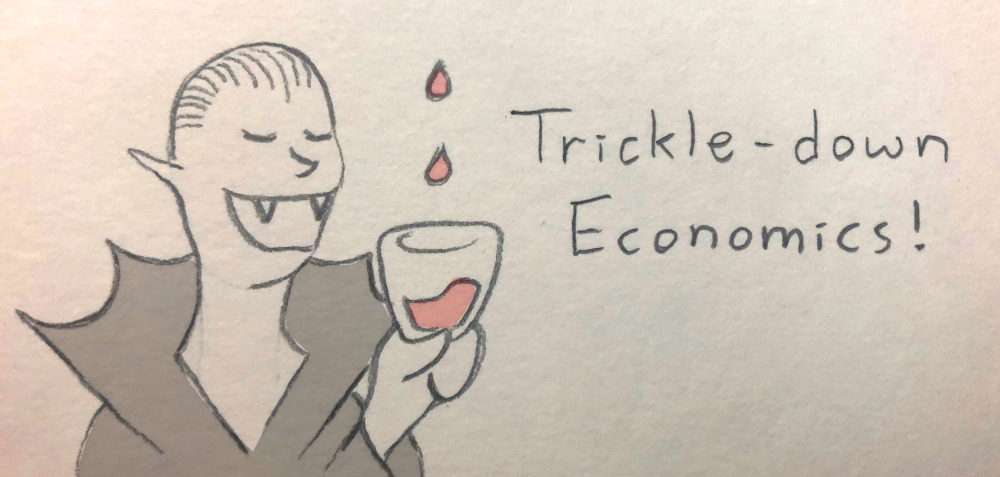

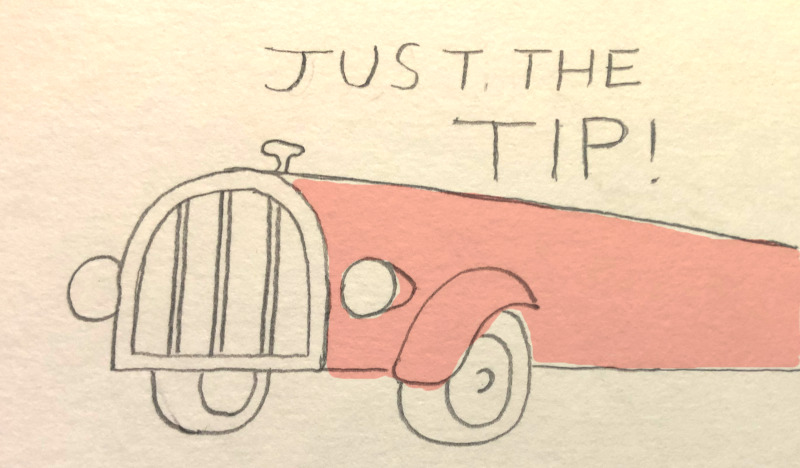

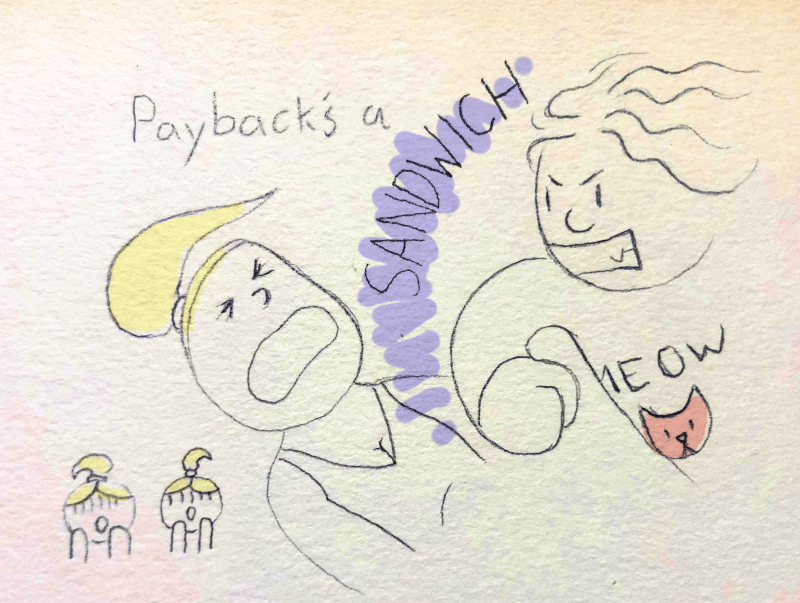
 Hot Off the Presses